Ownership structure
- Owner-purchased
- The property owner purchases and owns the system
- Proposed OmniLink lease
- OmniLink owns the system under a negotiated site lease
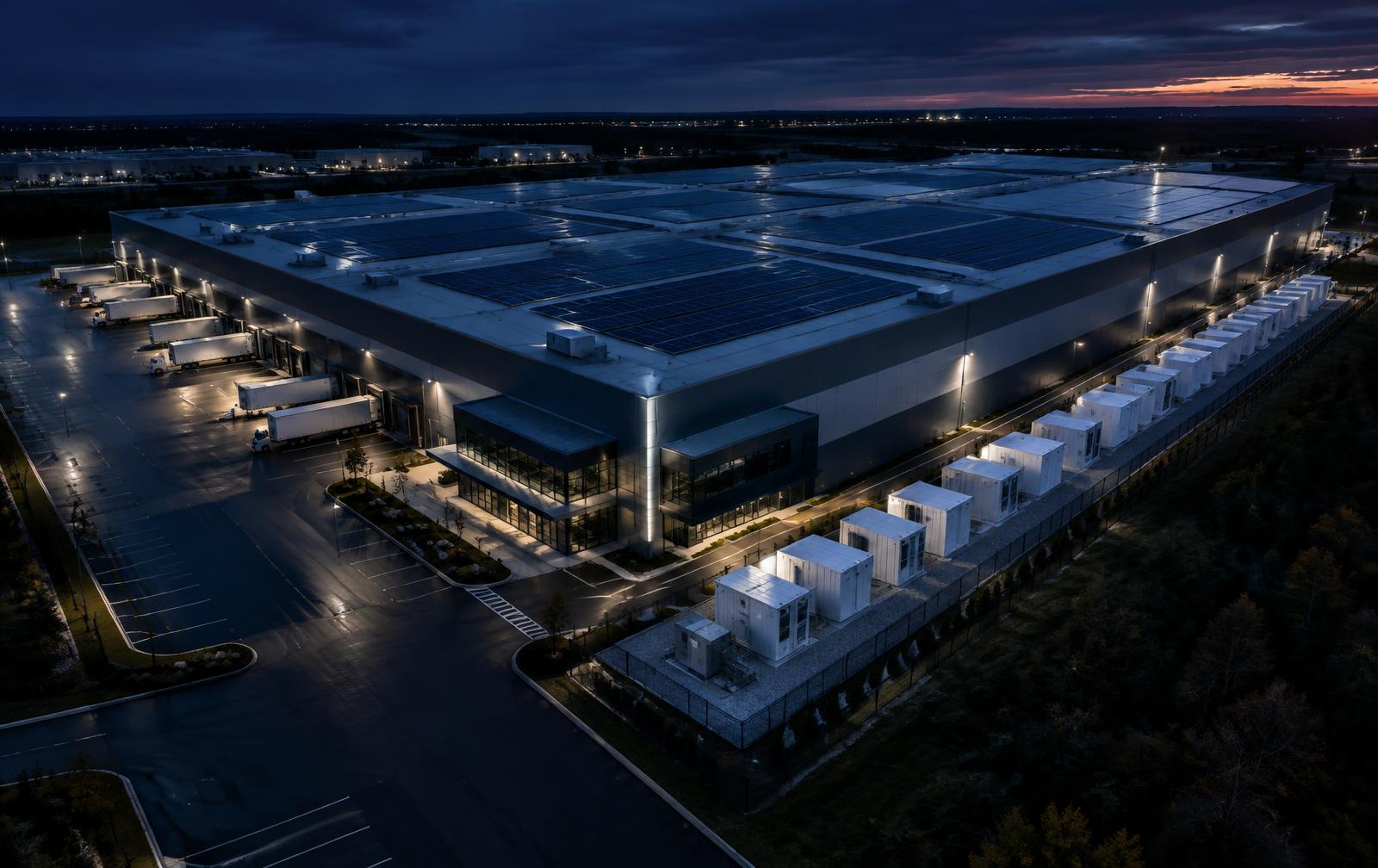
OmniLink Energy develops intelligent energy infrastructure that connects storage, power management, and the grid. We lease space on commercial and industrial properties, deliver the right energy solution for your site — battery storage, solar, or both — and pay you rent. There is no upfront project cost to the property owner.
01 · The OmniLink model
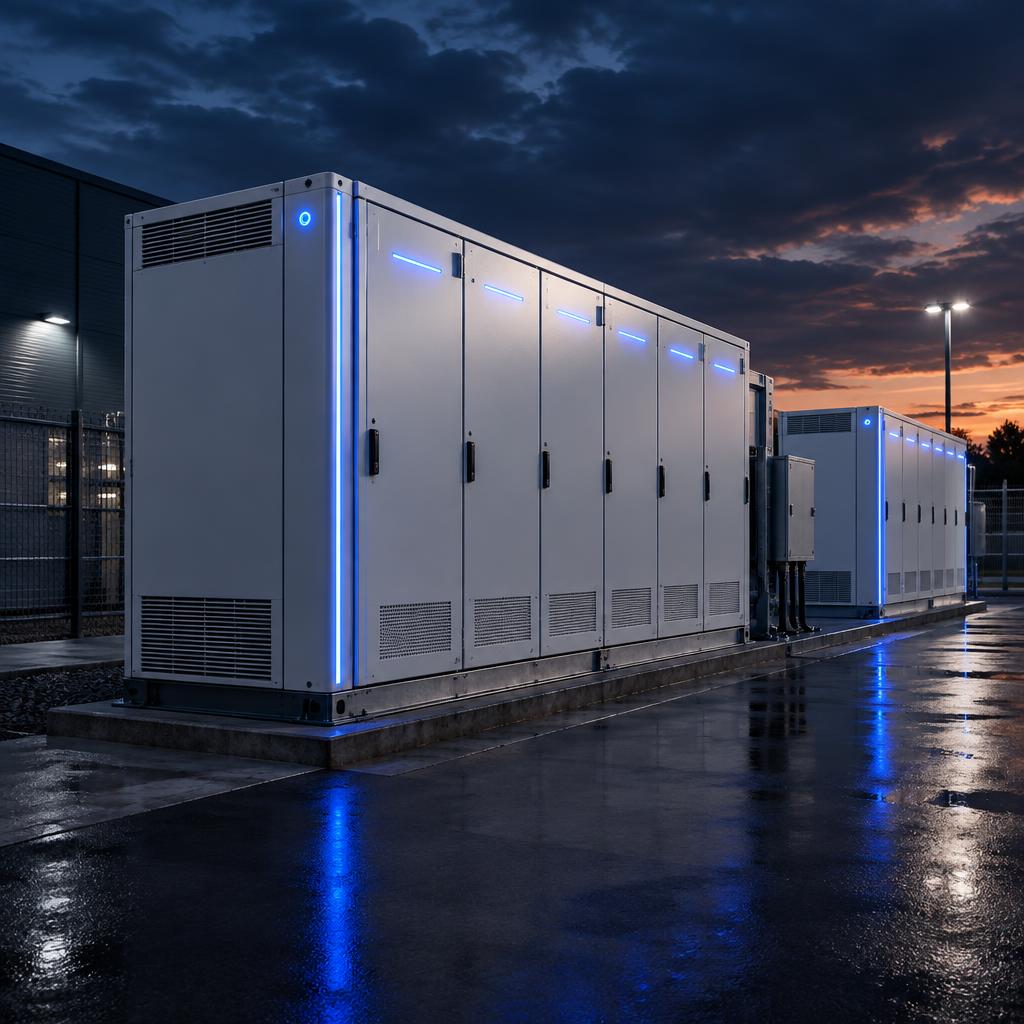
Most energy projects ask owners to invest. Under our proposed lease model, OmniLink proposes to finance, permit, install, own and operate the system, and pay rent for the space it occupies. The final lease and operating arrangements define each party's responsibilities, including maintenance, monitoring, shutdown and insurance.
Unused land, roof space, a parking area or a pad on your site — and access for installation and maintenance.
Rent under a site-specific lease, with proposed project responsibilities allocated to OmniLink. Rent, lease length, access rights, insurance, taxes, restoration and end-of-term removal are negotiated for every site.
Paid monthly
After commercial operation · as defined in the lease
02 · How it works
No upfront project cost to the property owner, subject to the final lease terms. A submitted property is an opportunity for review—not a guaranteed approval, lease or project. Utility bills and interval data come later, only when diligence is needed. Rent starts only after the site is approved, the lease is signed, permits and utility interconnection are secured, construction and commissioning are complete, and the system reaches commercial operation.
Share your contact details, address, role and approximate available roof, land or parking space. This opens a review; it does not guarantee approval or a lease.
OmniLink screens the location and available space to decide whether the property warrants deeper diligence. Some opportunities will not advance.
For promising sites, we request 12 months of utility bills and available 15-minute interval data to evaluate load, rates and project fit.
If both parties want to continue, an LOI provides access for a no-cost site inspection and further review.
OmniLink reviews the diligence and inspection results, then qualifies or declines the opportunity.
Only an approved site receives a proposed lease. The project moves forward only after both parties negotiate and sign the final lease.
The leased project must secure required municipal, agency and utility approvals before construction can begin.
Construction is estimated at 2–6 months after approvals, depending on the site and location. This is not the time from inquiry to rent. Rent begins after commissioning and commercial operation, as defined in the final lease.
Not sure where to start? The preliminary site screening uses your role, property location and estimated available space for an initial read before utility data is requested. It cannot confirm utility capacity, interconnection cost, fire-code approval, project economics or a rent offer.
03 · Intelligent energy infrastructure
No two sites are alike, so no two projects should look the same. Every property starts with a no-cost assessment, and that assessment determines the best model — whether that's standalone commercial battery storage, industrial battery storage paired with solar, or another combination that fits your site and the local grid.
Commercial and industrial battery systems that store low-cost energy, release it when it's worth the most, and strengthen the local grid.
On-site solar generation paired with batteries — often the strongest fit, capturing energy from your own roof or land.
Where storage isn't the right fit, solar alone can turn unused roof or ground space into a new income stream.
Whichever model your assessment points to, the proposed structure assigns project financing, permitting, ownership, operation and maintenance to OmniLink. Rent and all responsibilities are finalized in the site-specific lease.
Property lease income, potential utility-bill savings and potential backup power are different outcomes. Savings require a behind-the-meter design; backup power requires dedicated resilience equipment and controls. Neither is included automatically.
04 · Who we work with
Warehouses
Distribution & logistics
Retail centers
Apartment buildings
Industrial pads
If your site has unused roof, land or paved space, submit the basic property details for an initial opportunity review. No utility files are needed at this stage.
Where we evaluate
We evaluate opportunities nationwide, with an initial focus on New York. Florida, New Jersey, Pennsylvania, Massachusetts, New Hampshire and Texas are additional markets of interest.
See the full map →Safety & compliance
Equipment credentials verified
Applicable codes identified
Authority approval required
Emergency controls defined
Insurance allocation negotiated
Maintenance scope documented
Equipment, design and operating arrangements are reviewed for each proposed site. Projects are designed for applicable codes and submitted to the relevant authorities for approval. Monitoring, shutdown, maintenance, emergency response and insurance responsibilities are confirmed in the final lease and operating documents.
05 · Sample site // Illustrative
Rent depends on local grid capacity, utility tariffs, system size and the lease you negotiate — every lease is unique. Submit your property for an initial review to find out whether the opportunity may warrant deeper diligence.
Start site screening →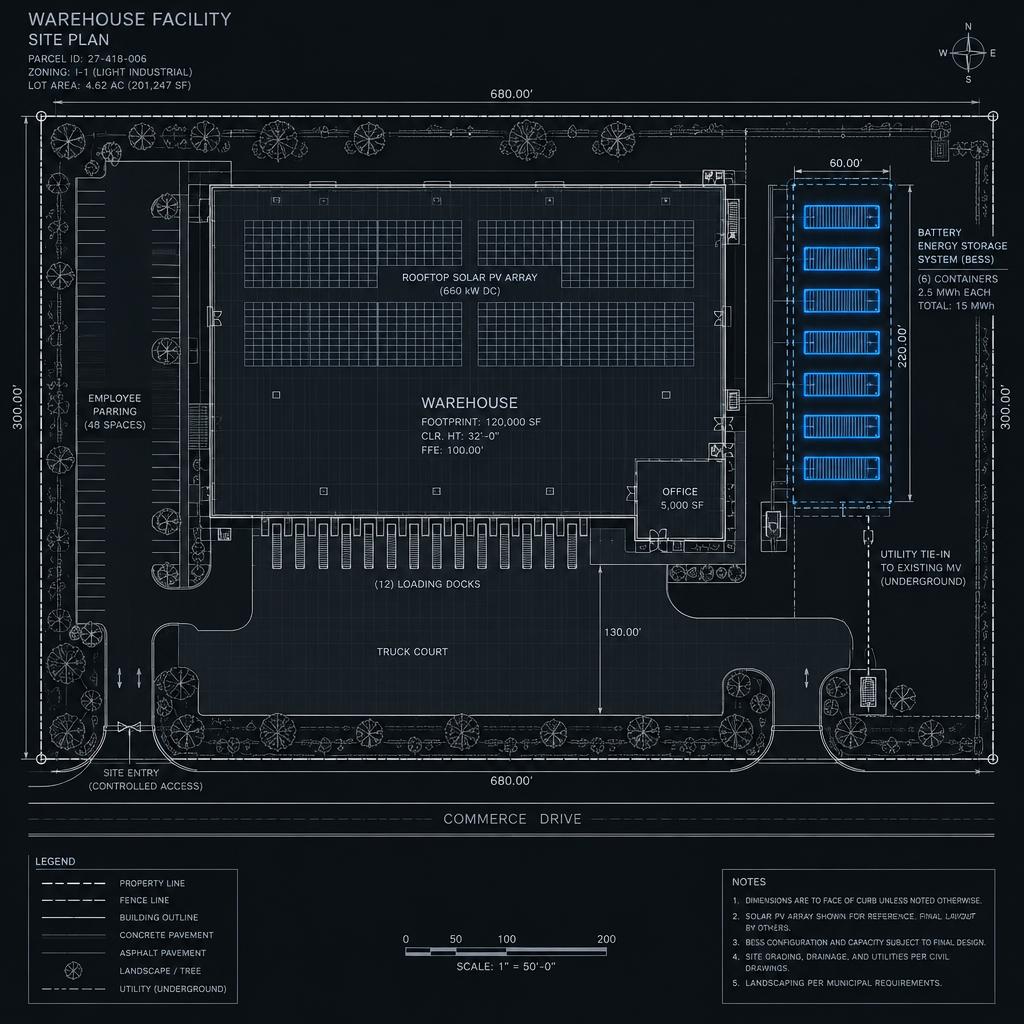
06 · Partnership details
07 · Property owners
Share your property address and available roof, land or parking space. We'll review whether battery storage, solar or both may warrant further diligence.
// No-cost site review
// No obligation
// Battery, solar, or both